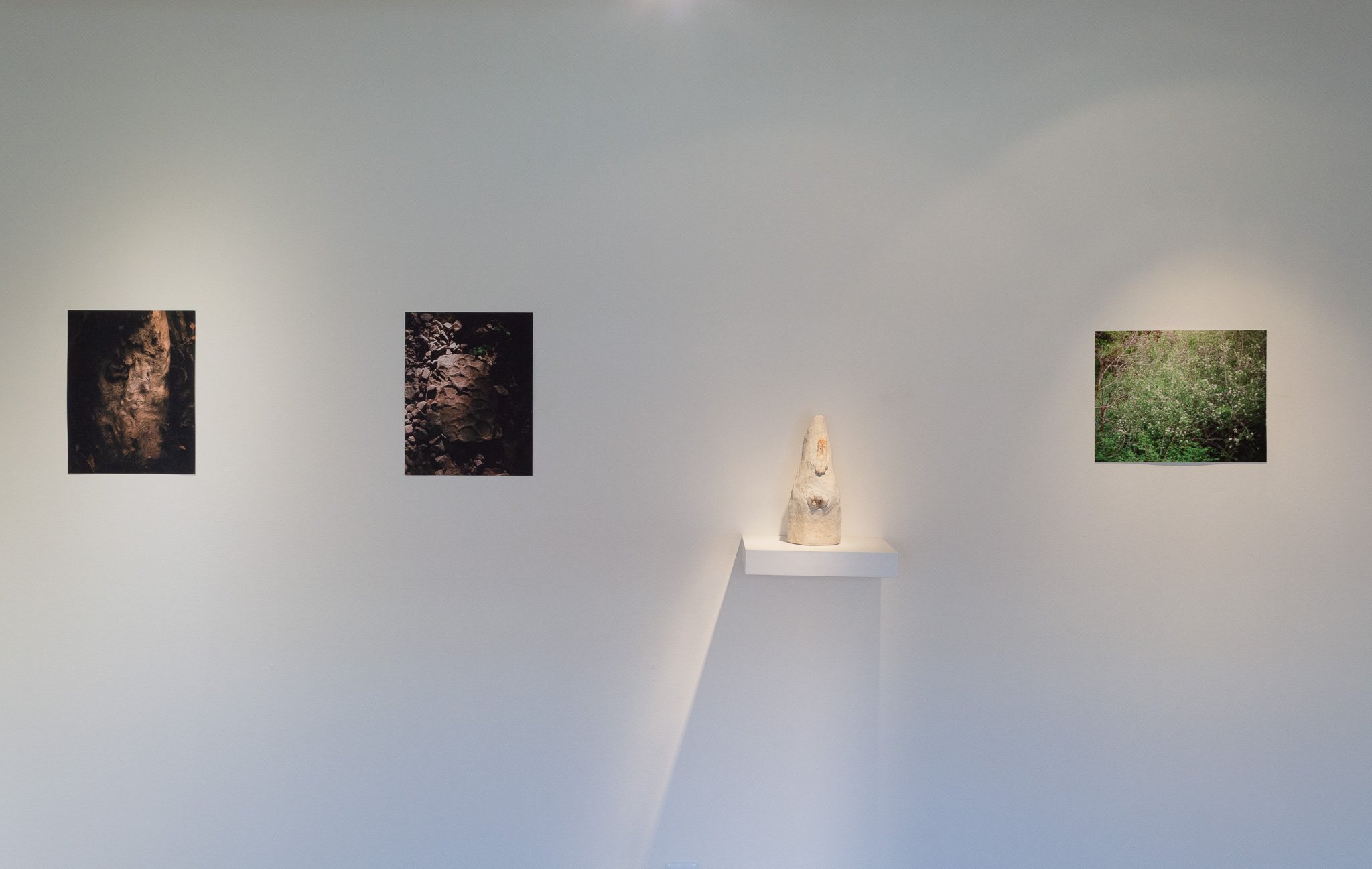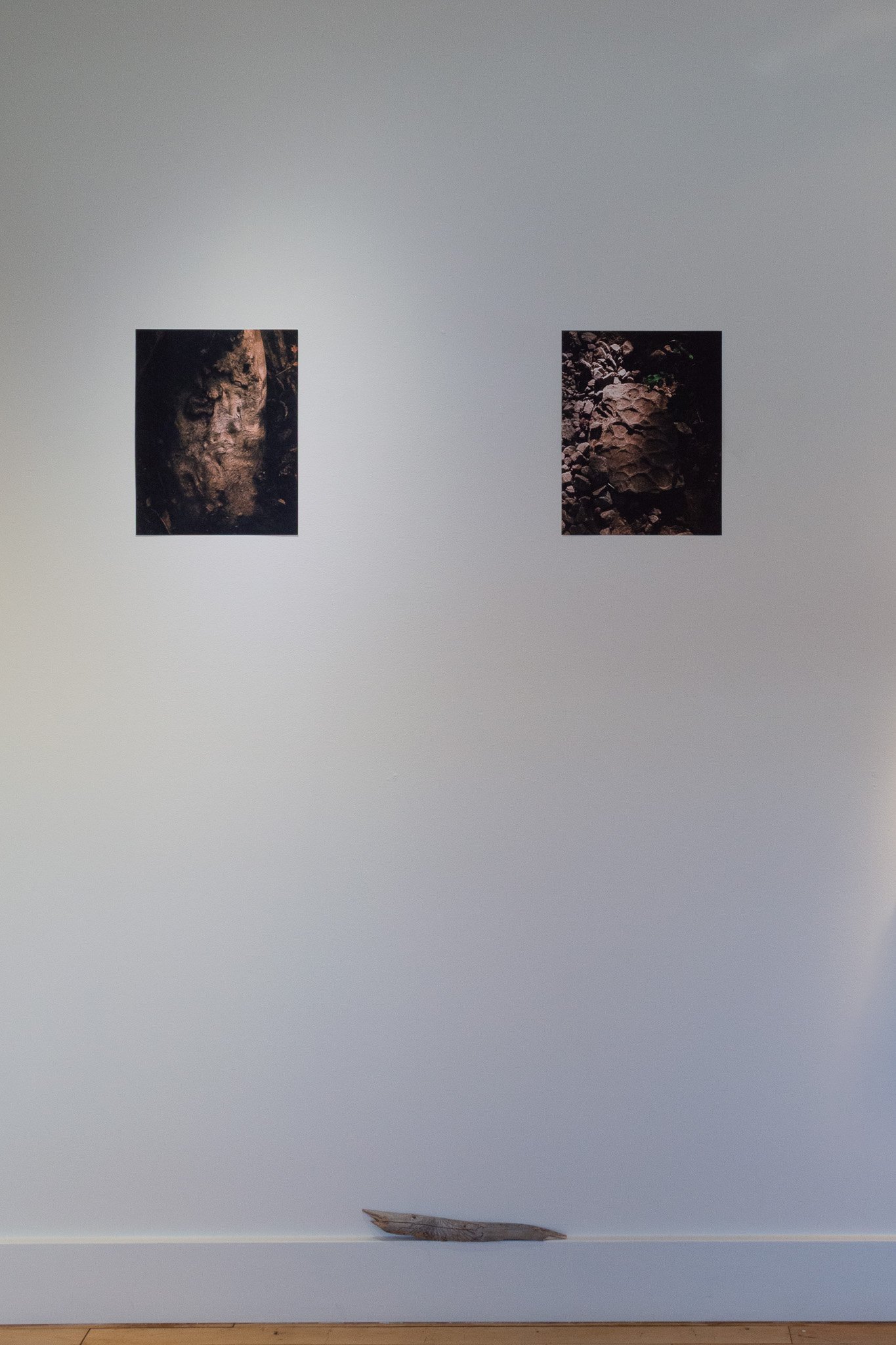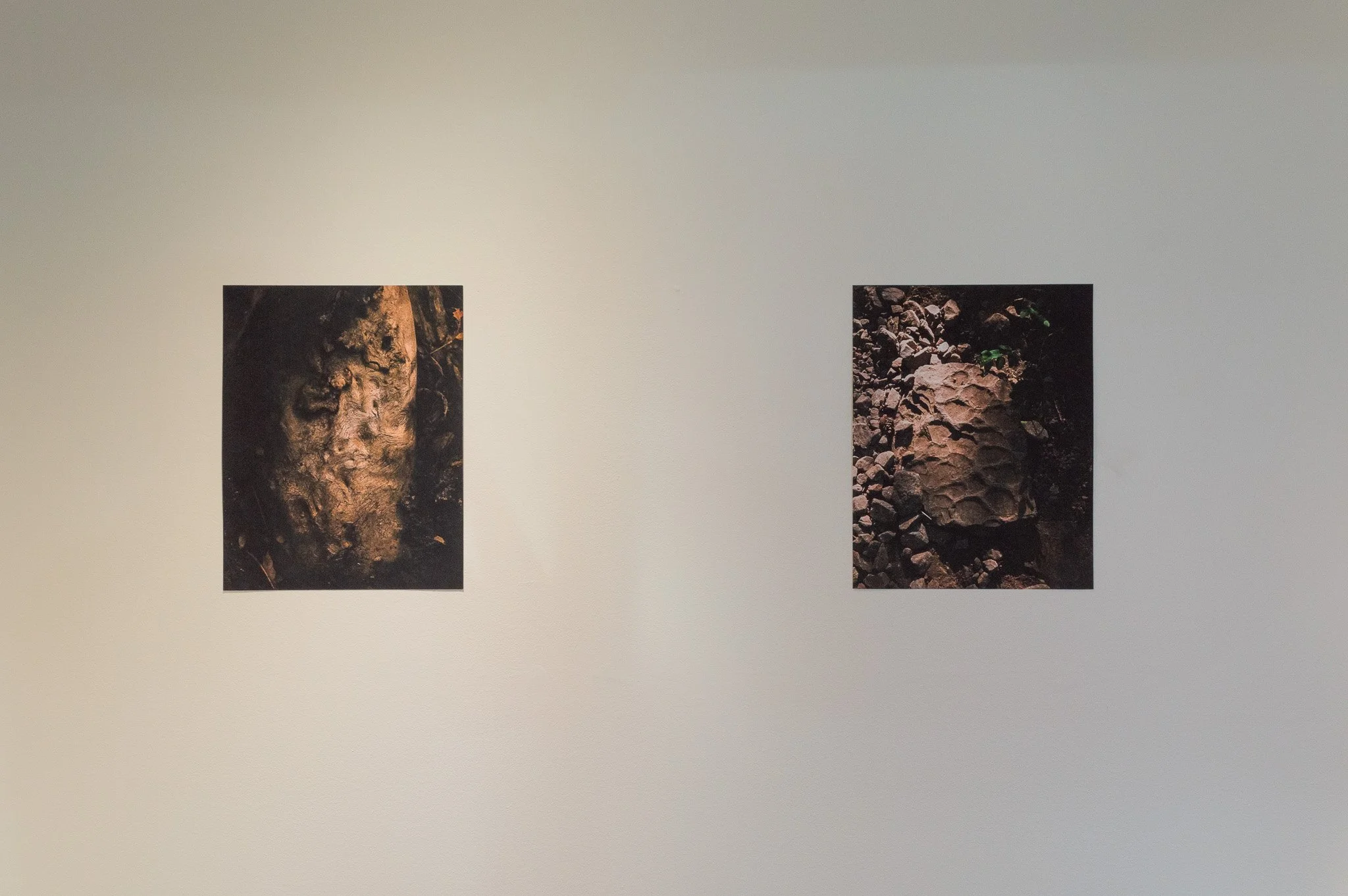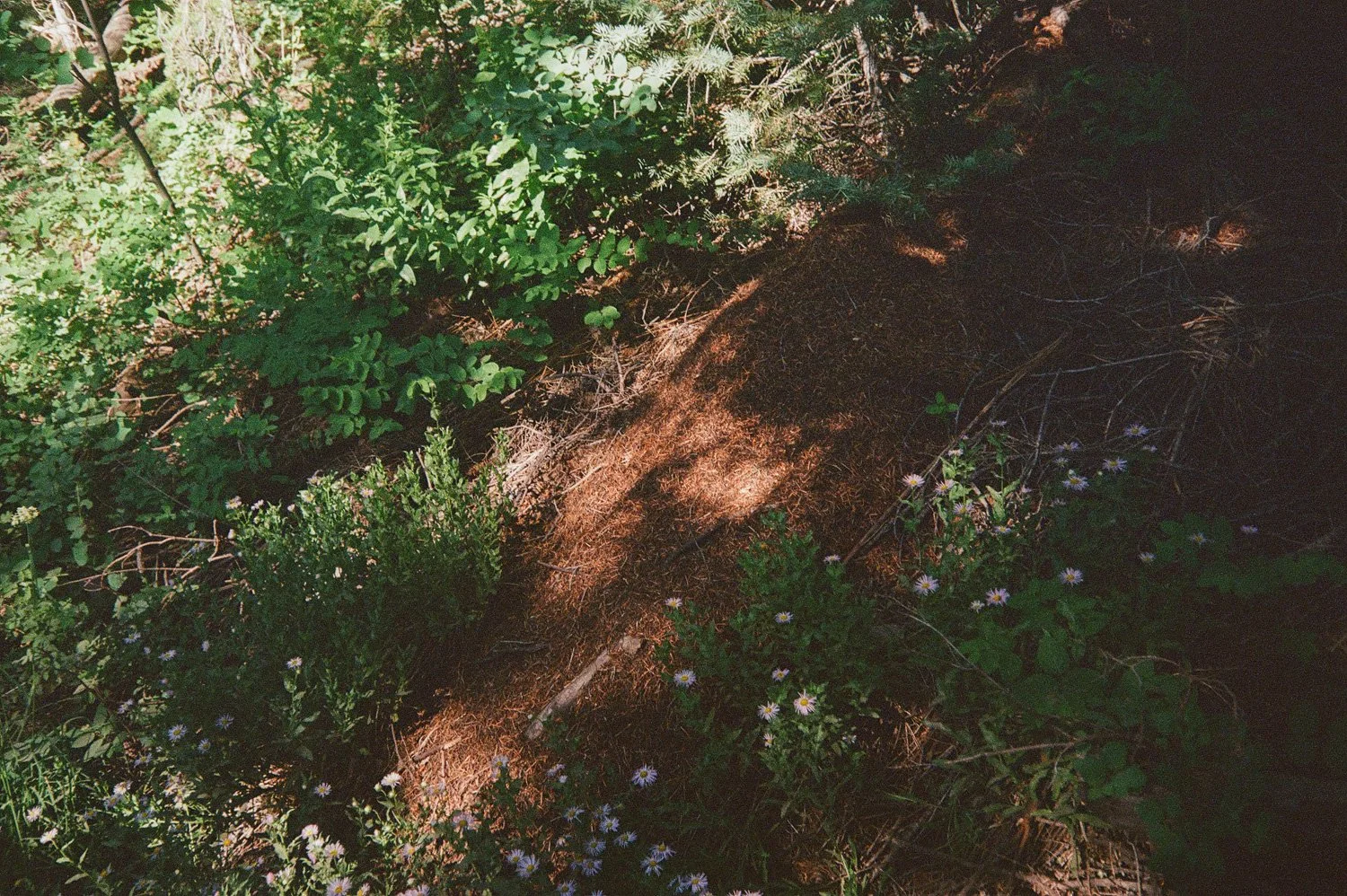
Found Silueta (after Ana Mendieta), 2025. Inkjet print, 11”x14”.
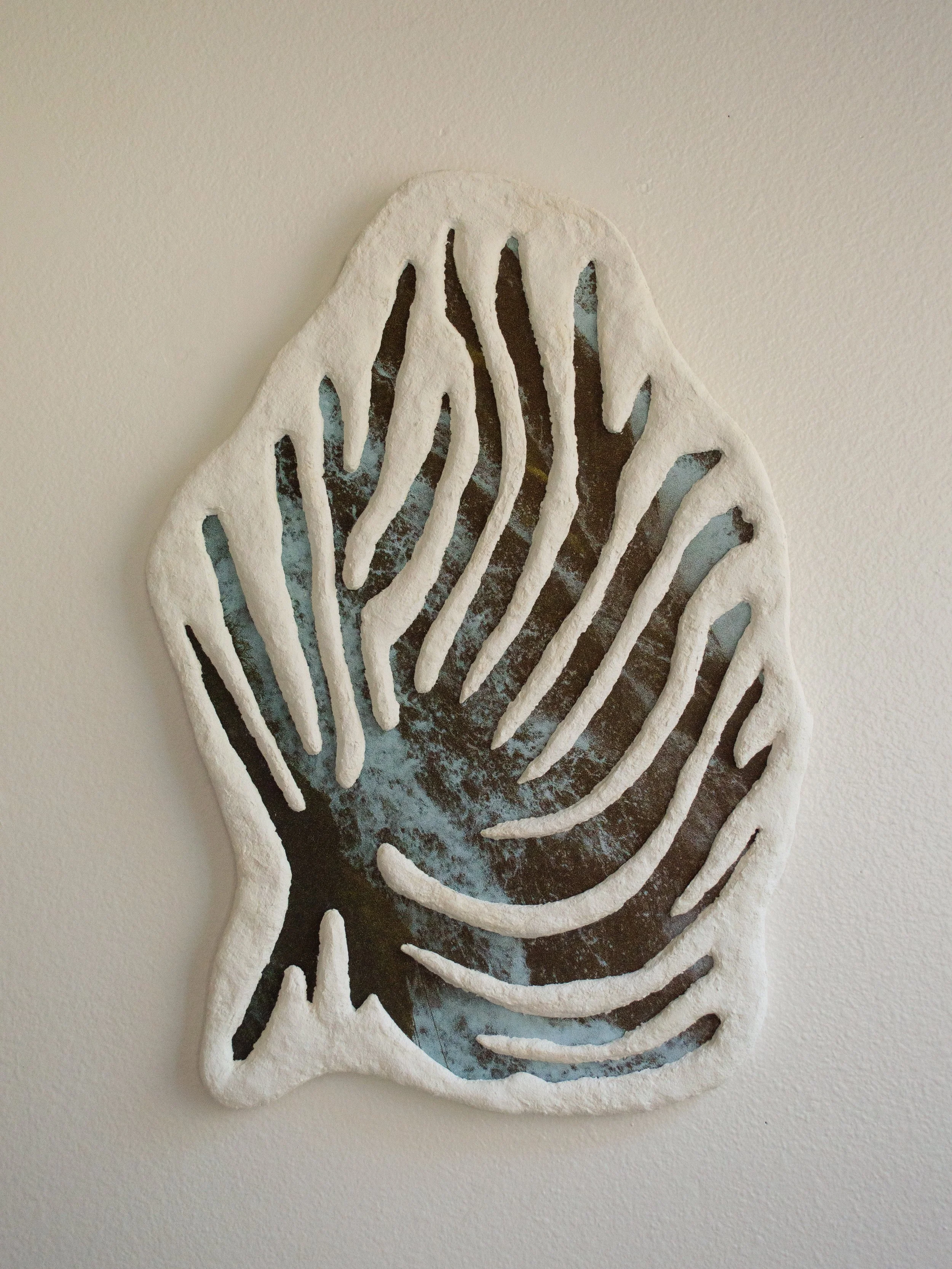
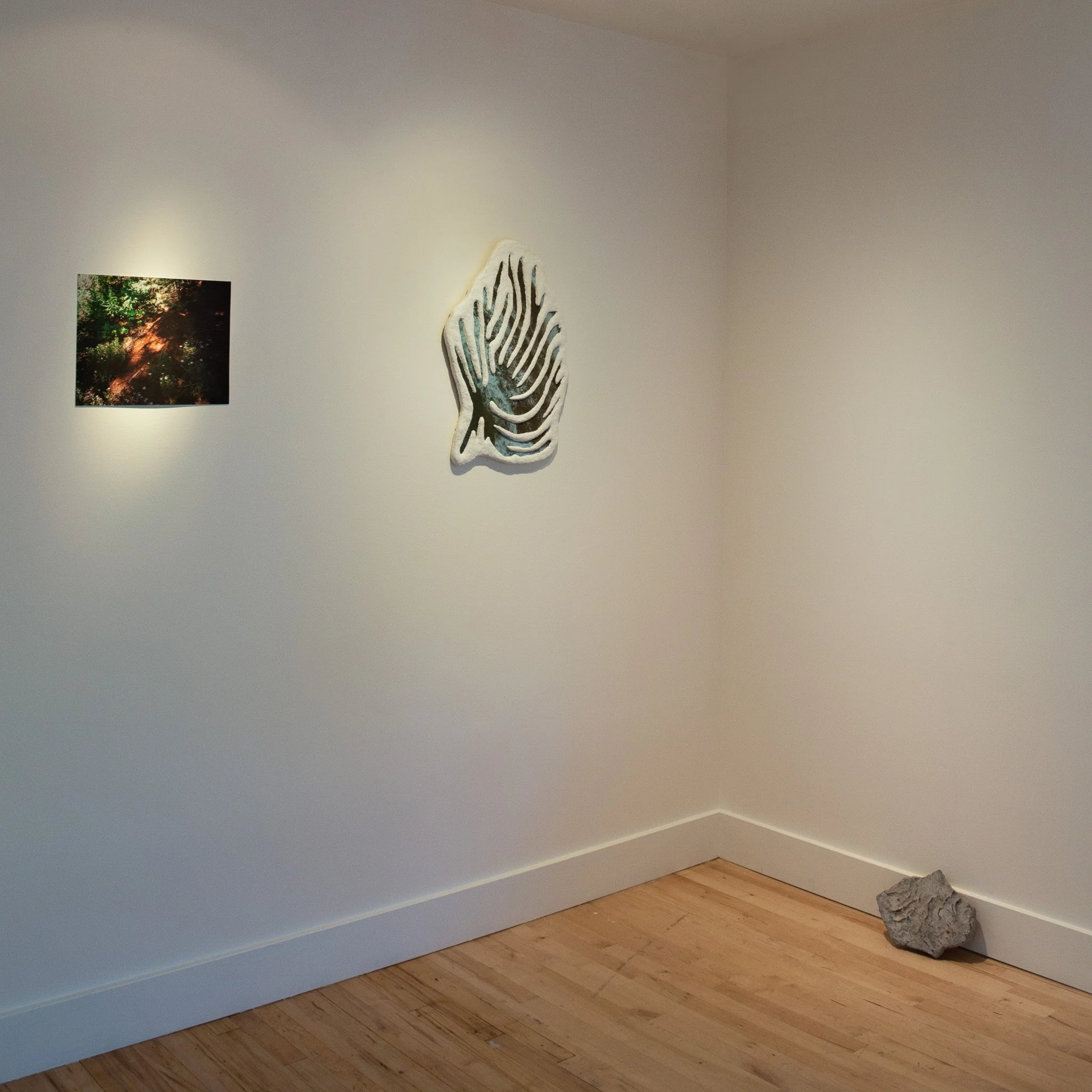
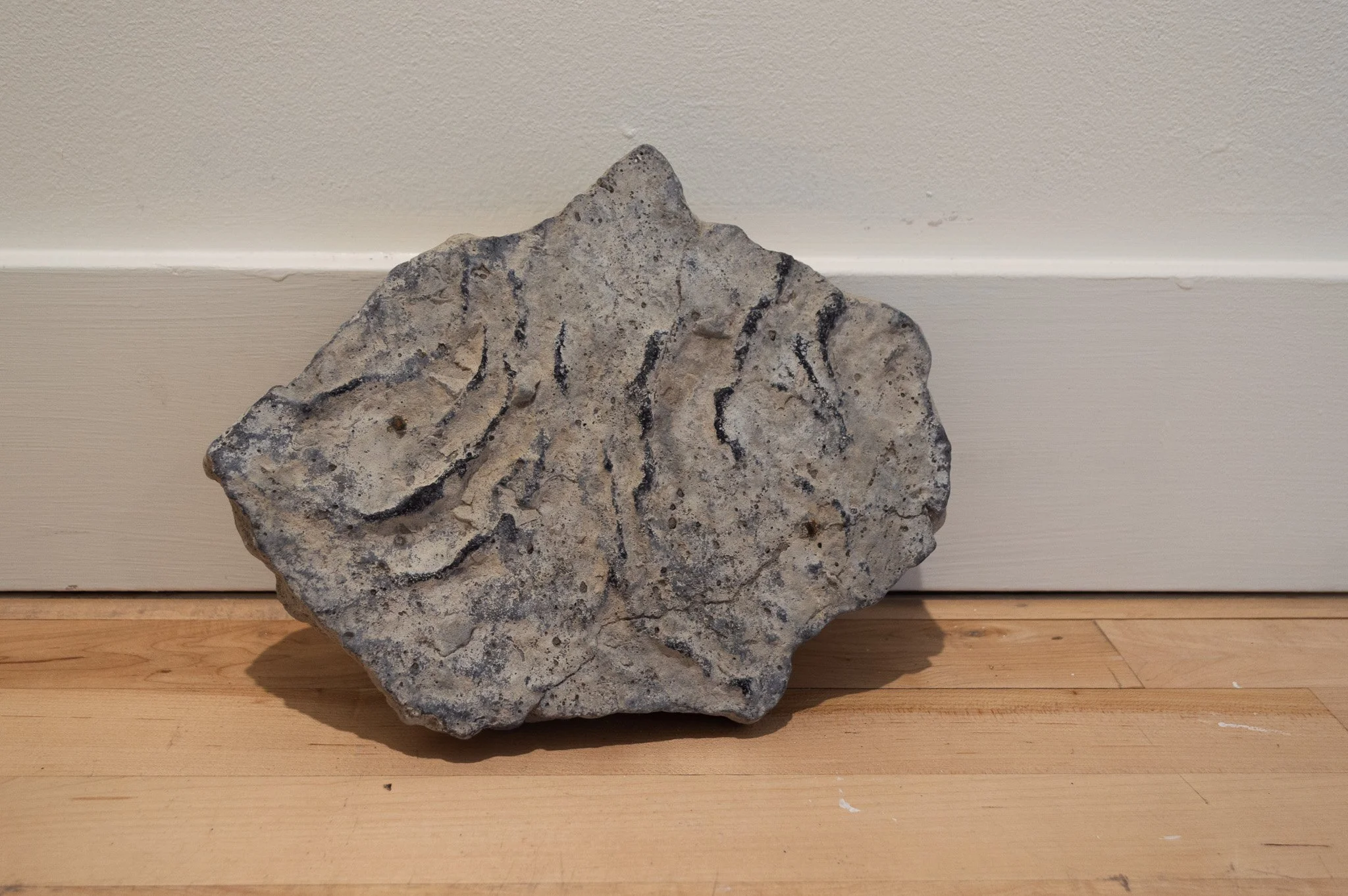
Tracing I, 2025. Paper pulp clay and inkjet print on wood, 22.5”x15.5”.
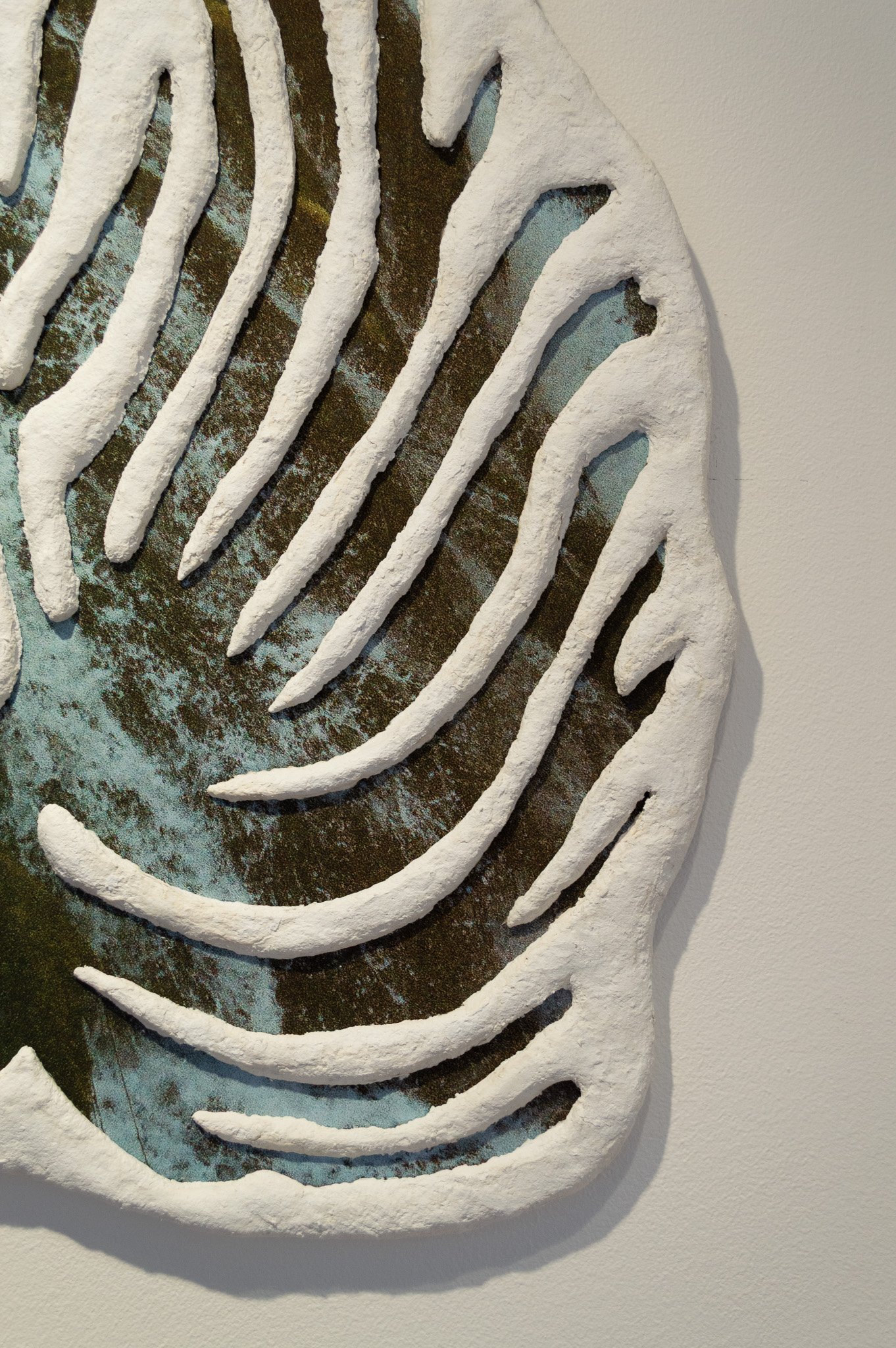
Detail of Tracing I
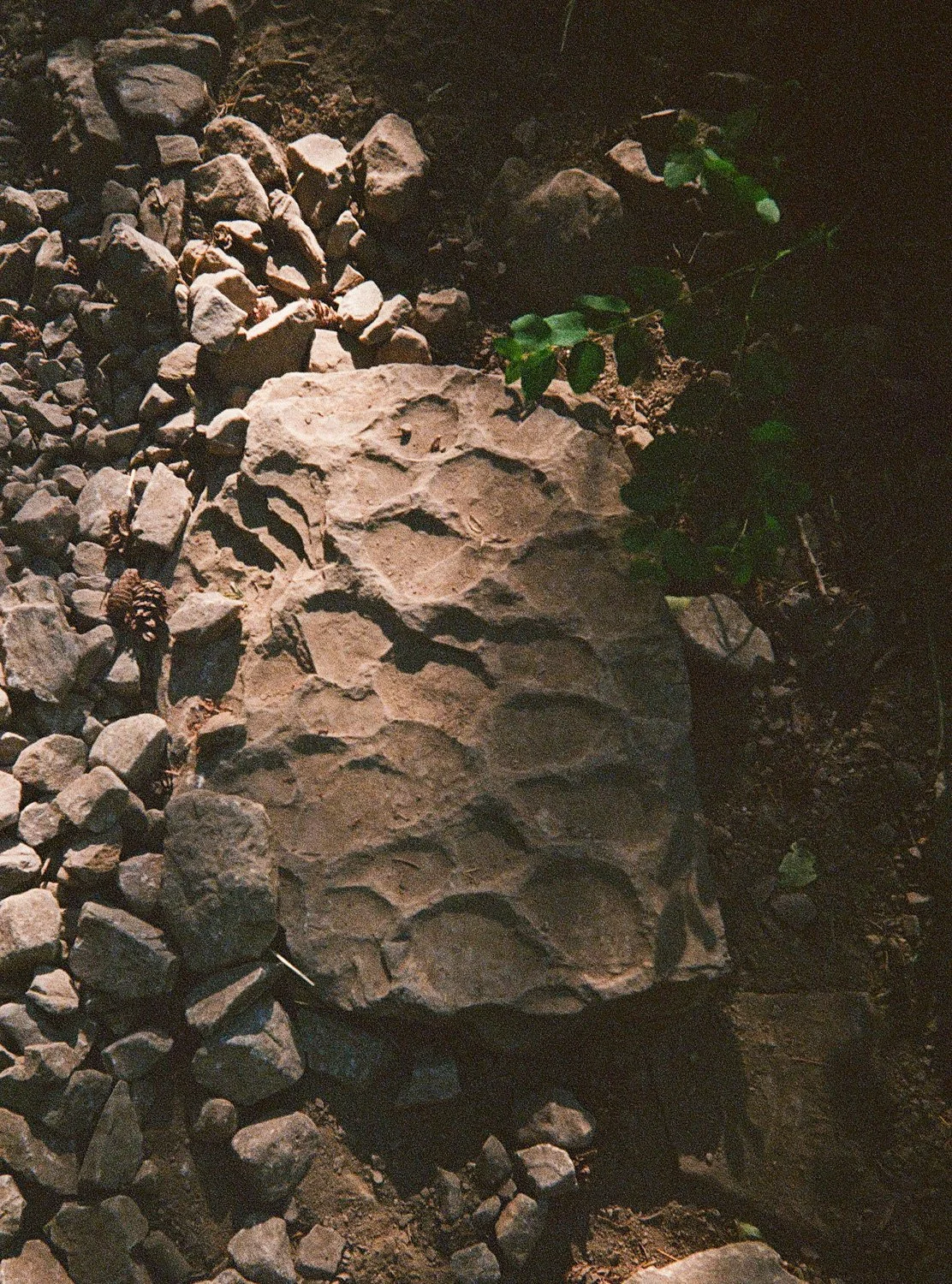
Magic Rock, 2025. Inkjet print, 14”x11”
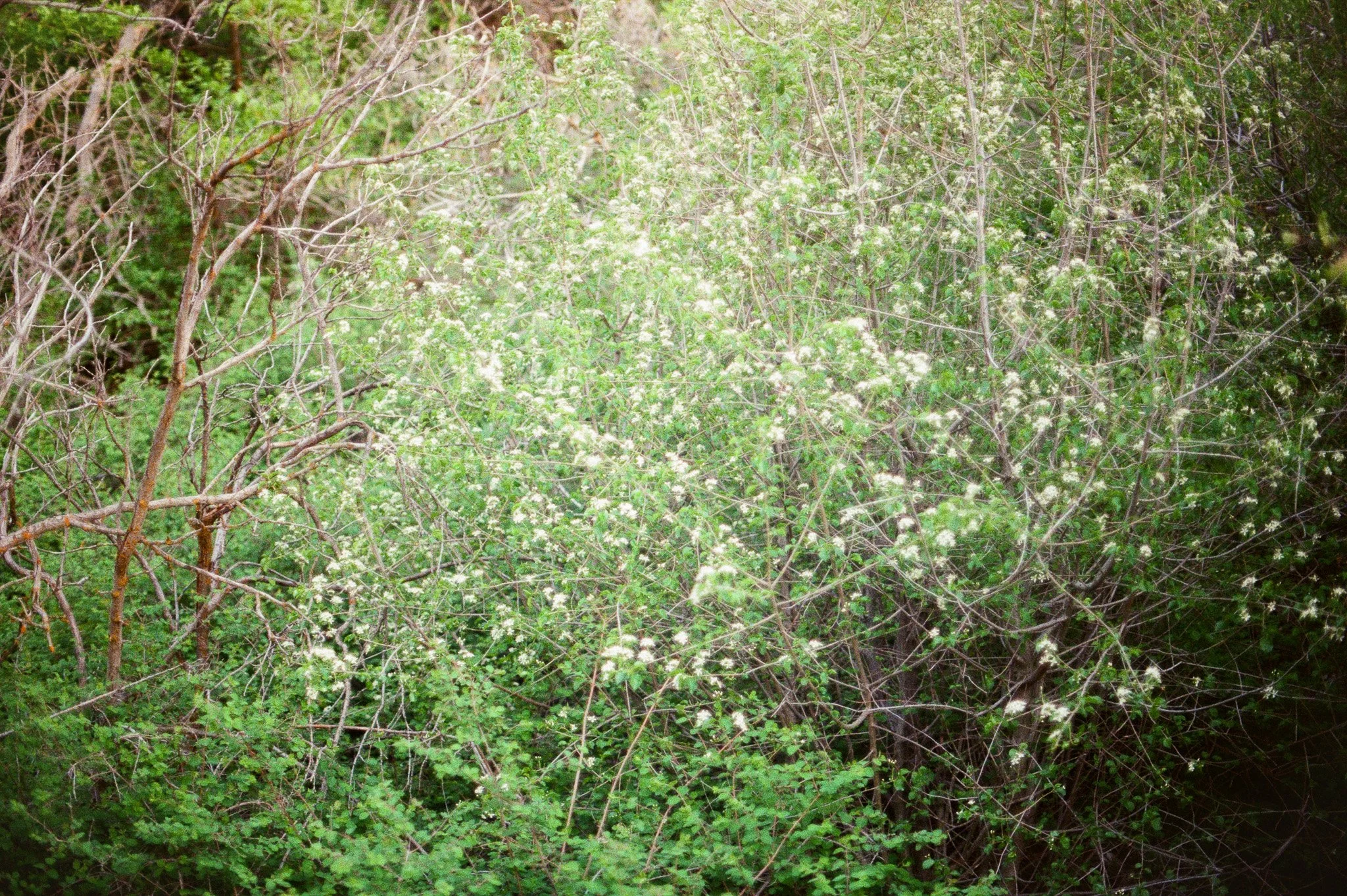
Blossom Portal, 2025. Inkjet print, 11”x14”.
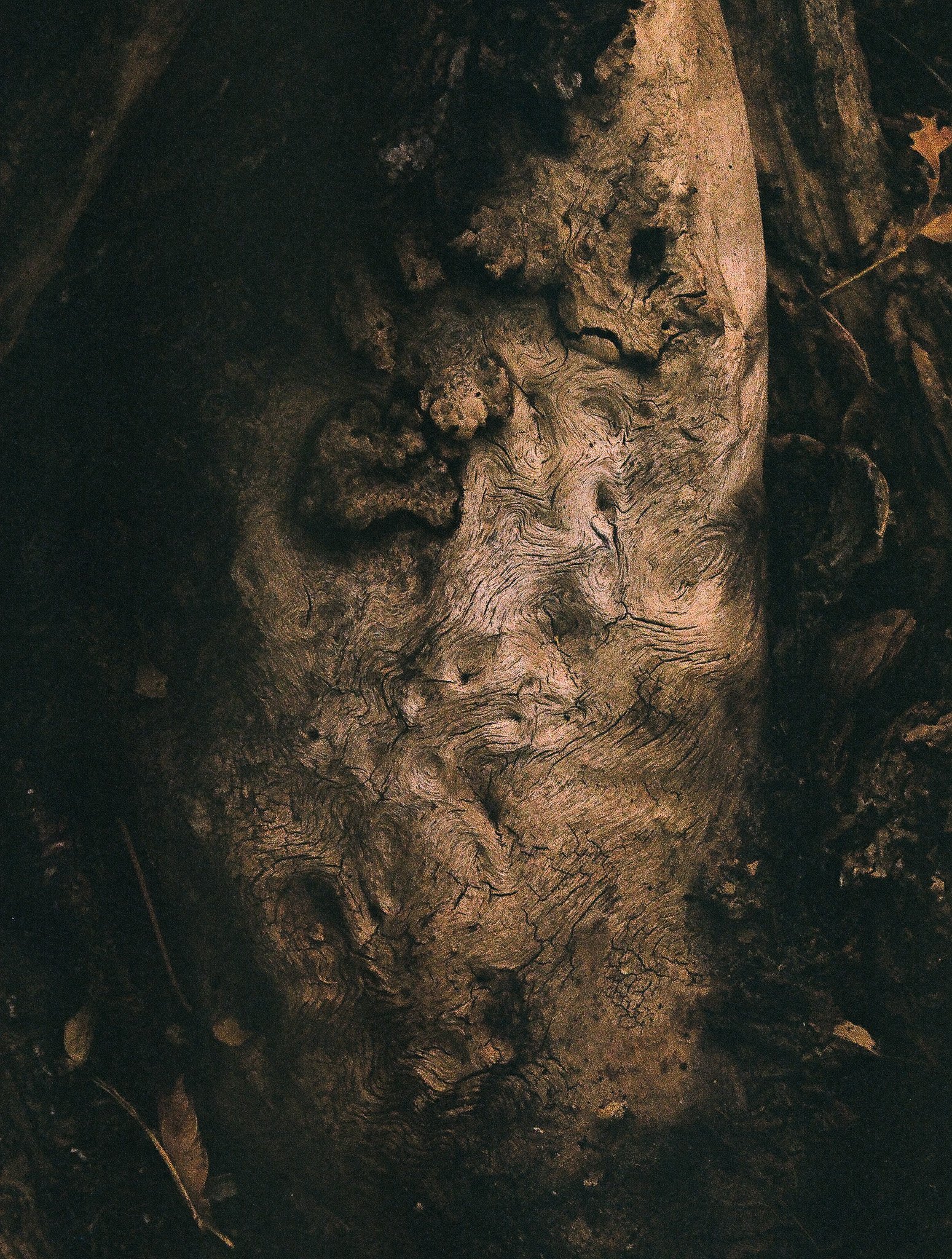
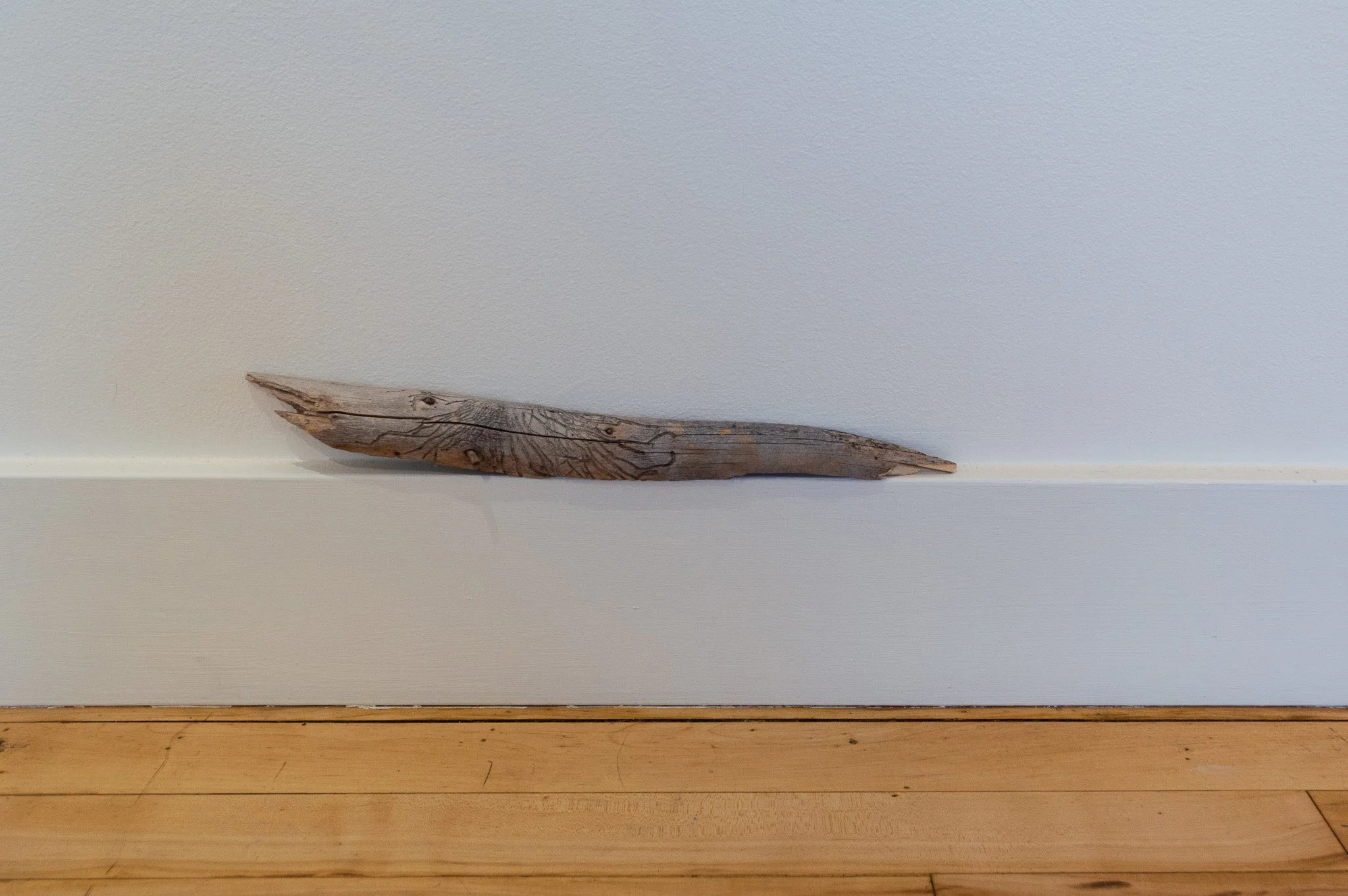
Wood Message, 2024. Inkjet print, 14”x11”.
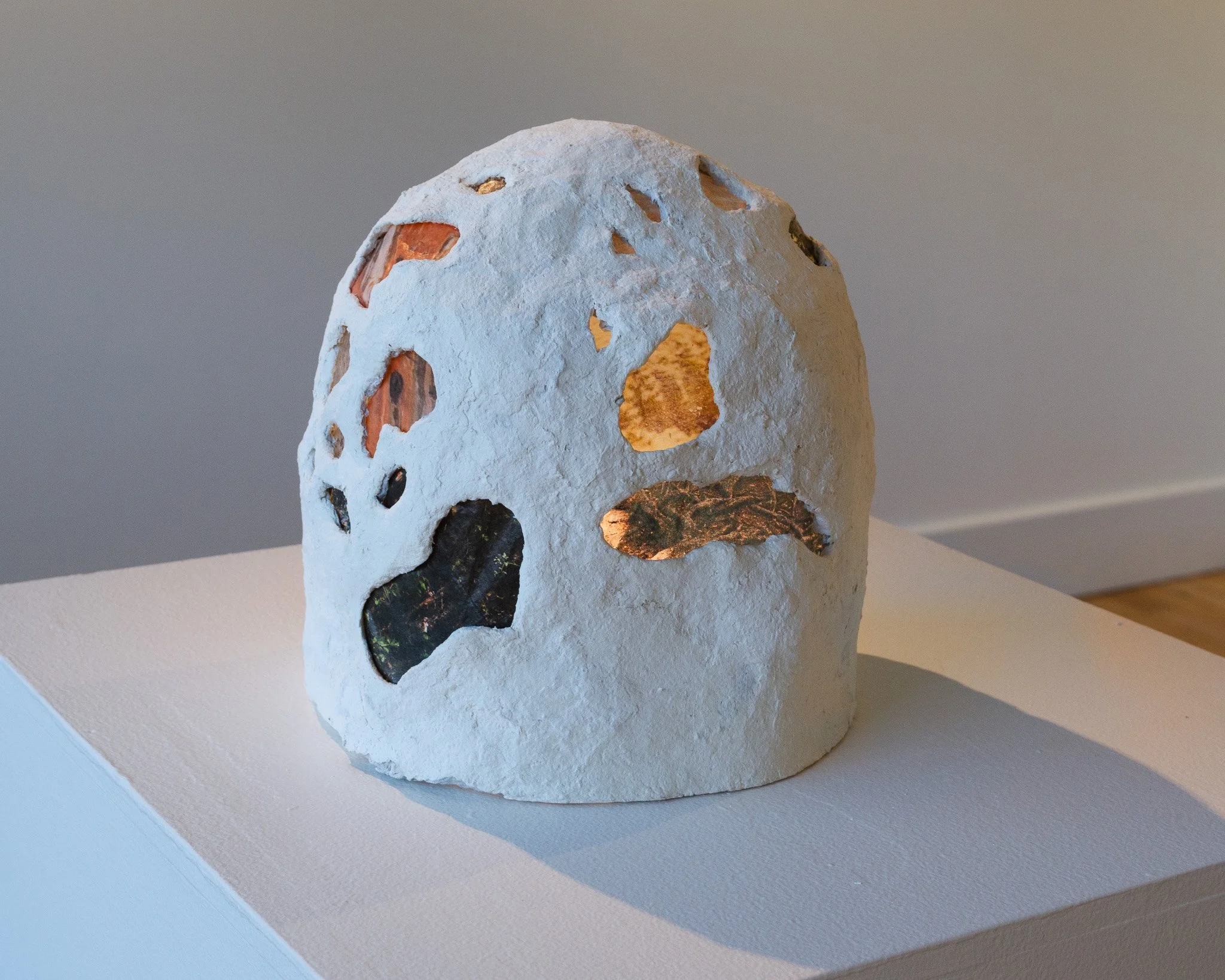
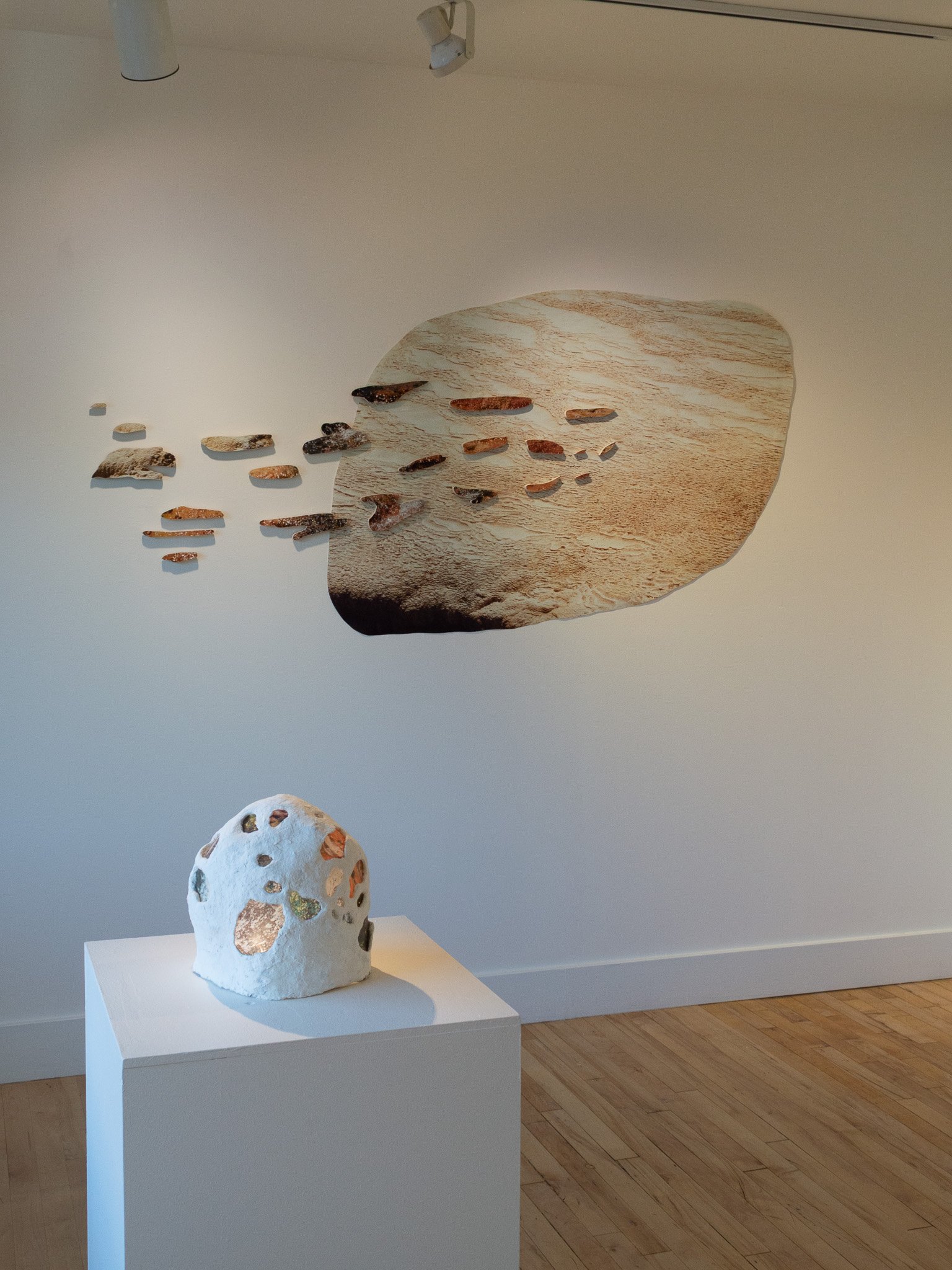
Tracings Portal, 2025. Paper pulp clay, rice paper, photo transfer, light; 7.5”x7”diameter.
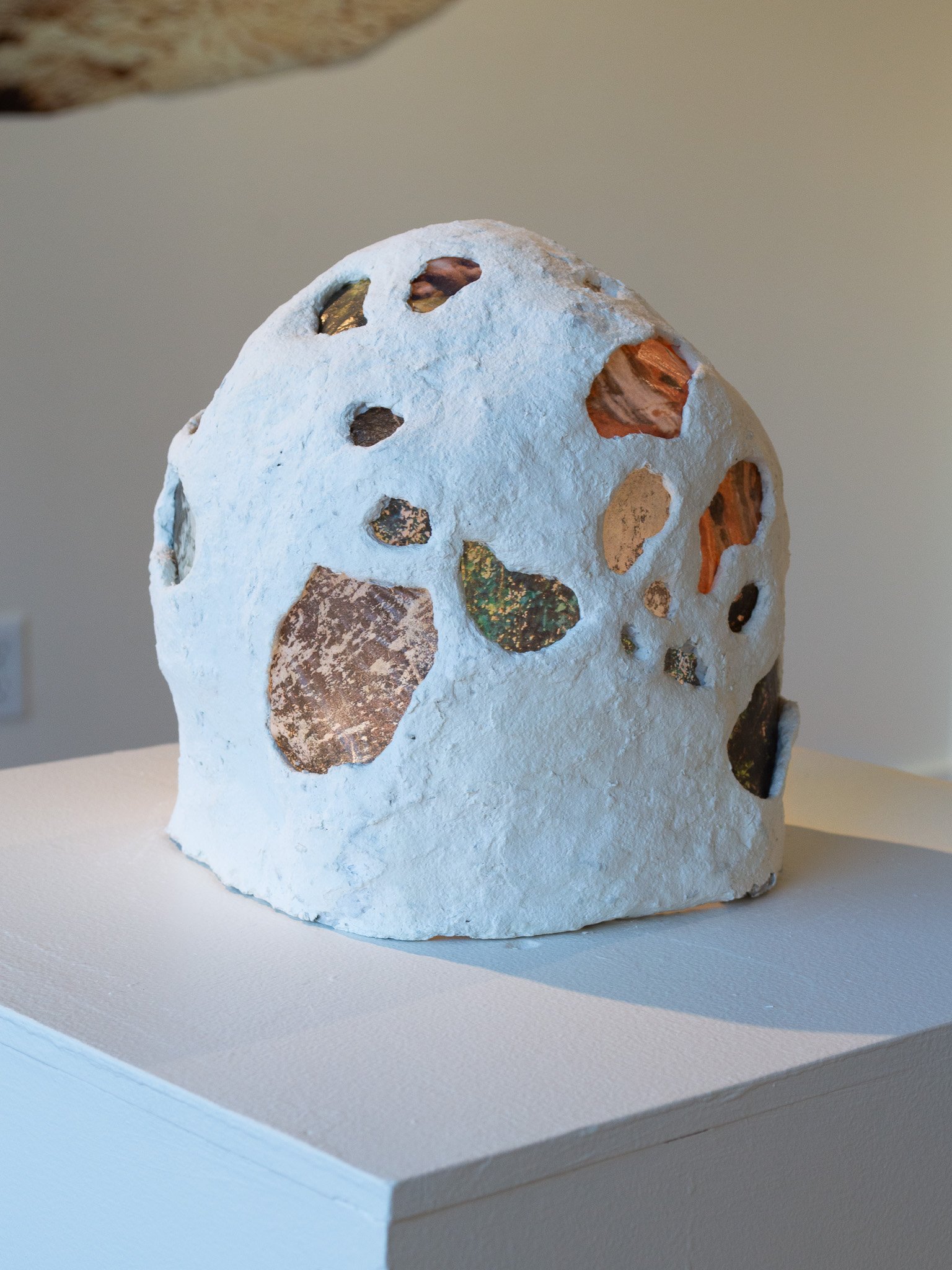
Alternate view of Tracings Portal
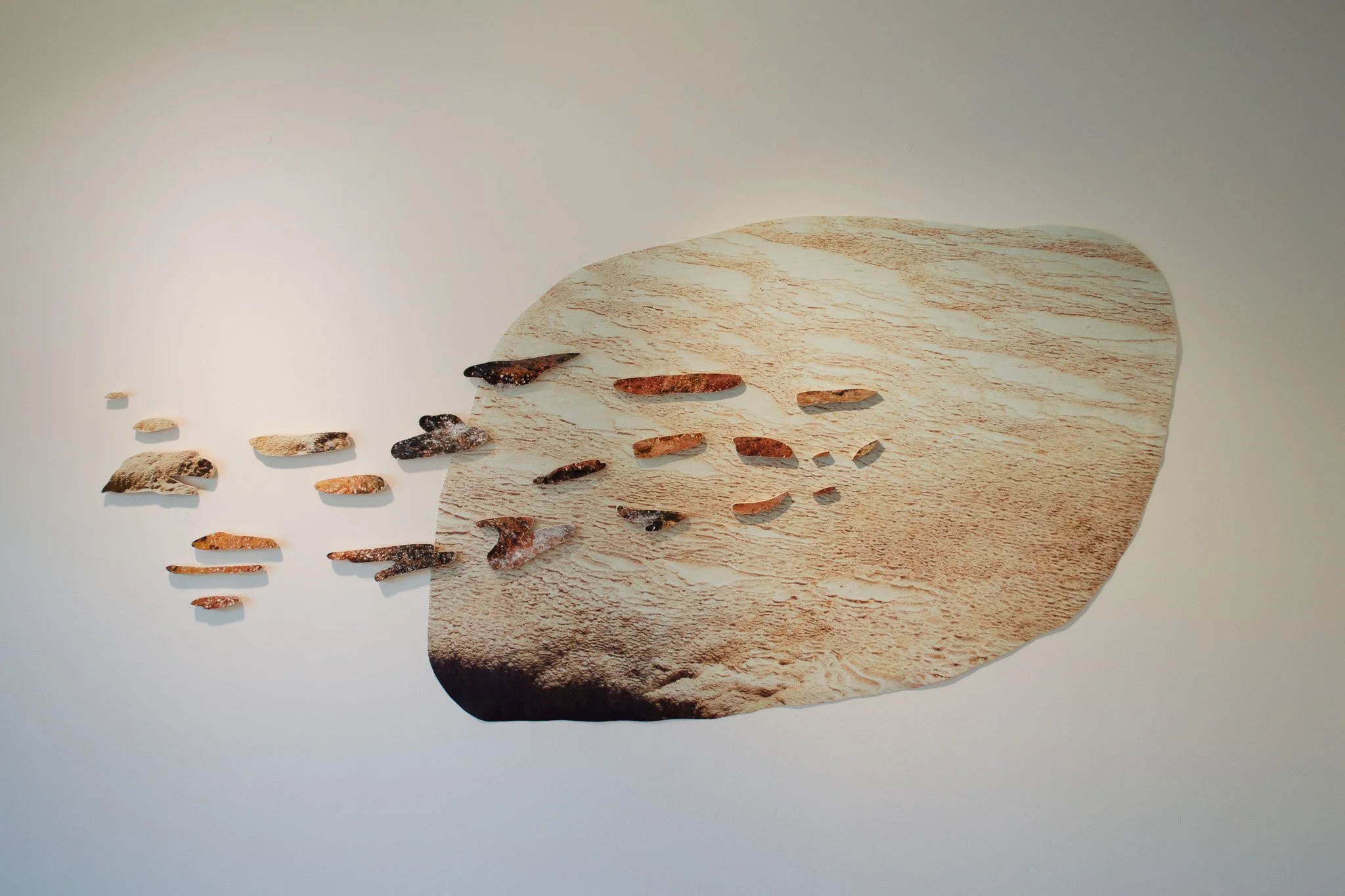
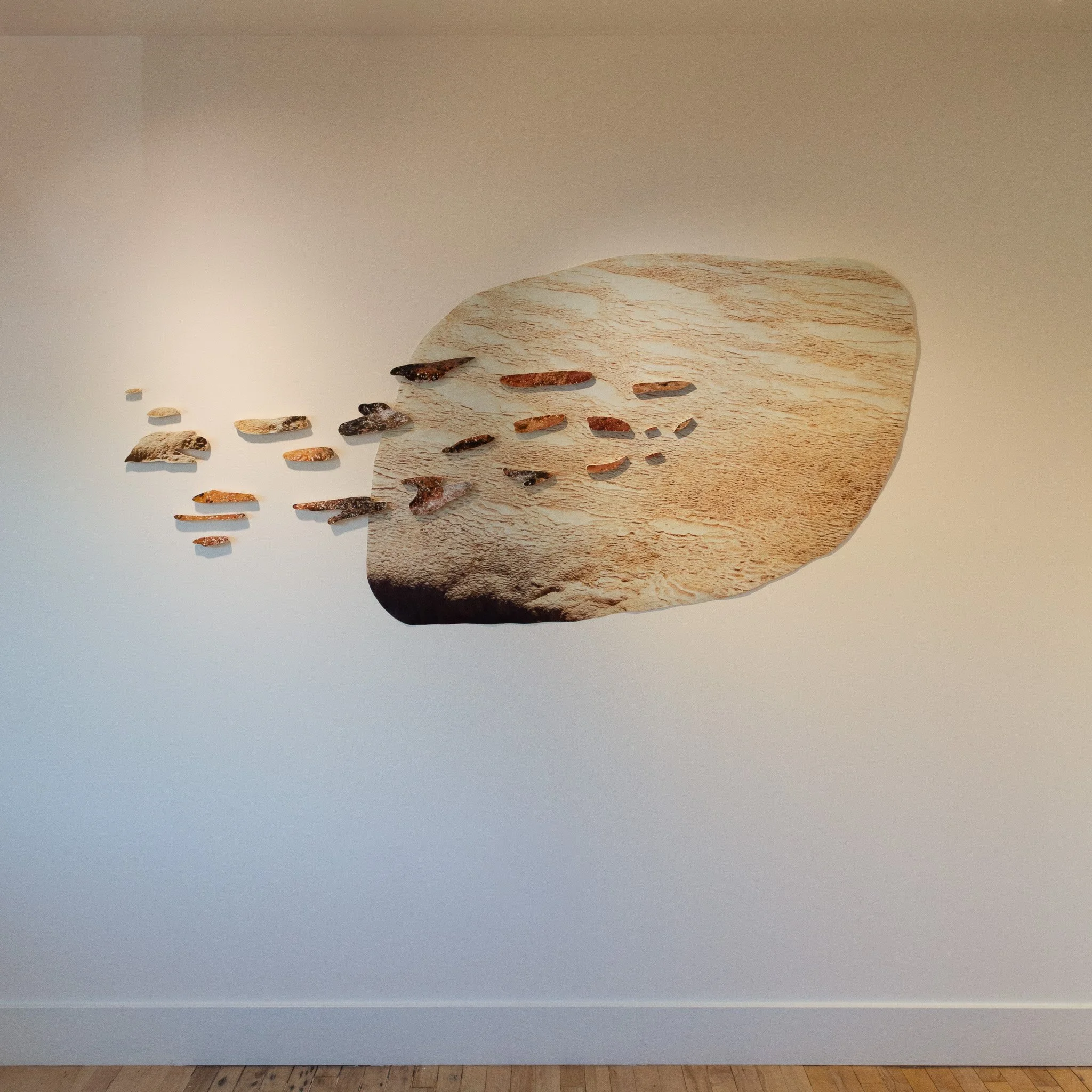
Geyser Tracing, 2025. Inkjet print on wood & canvas. Approx. 33.5”x50”
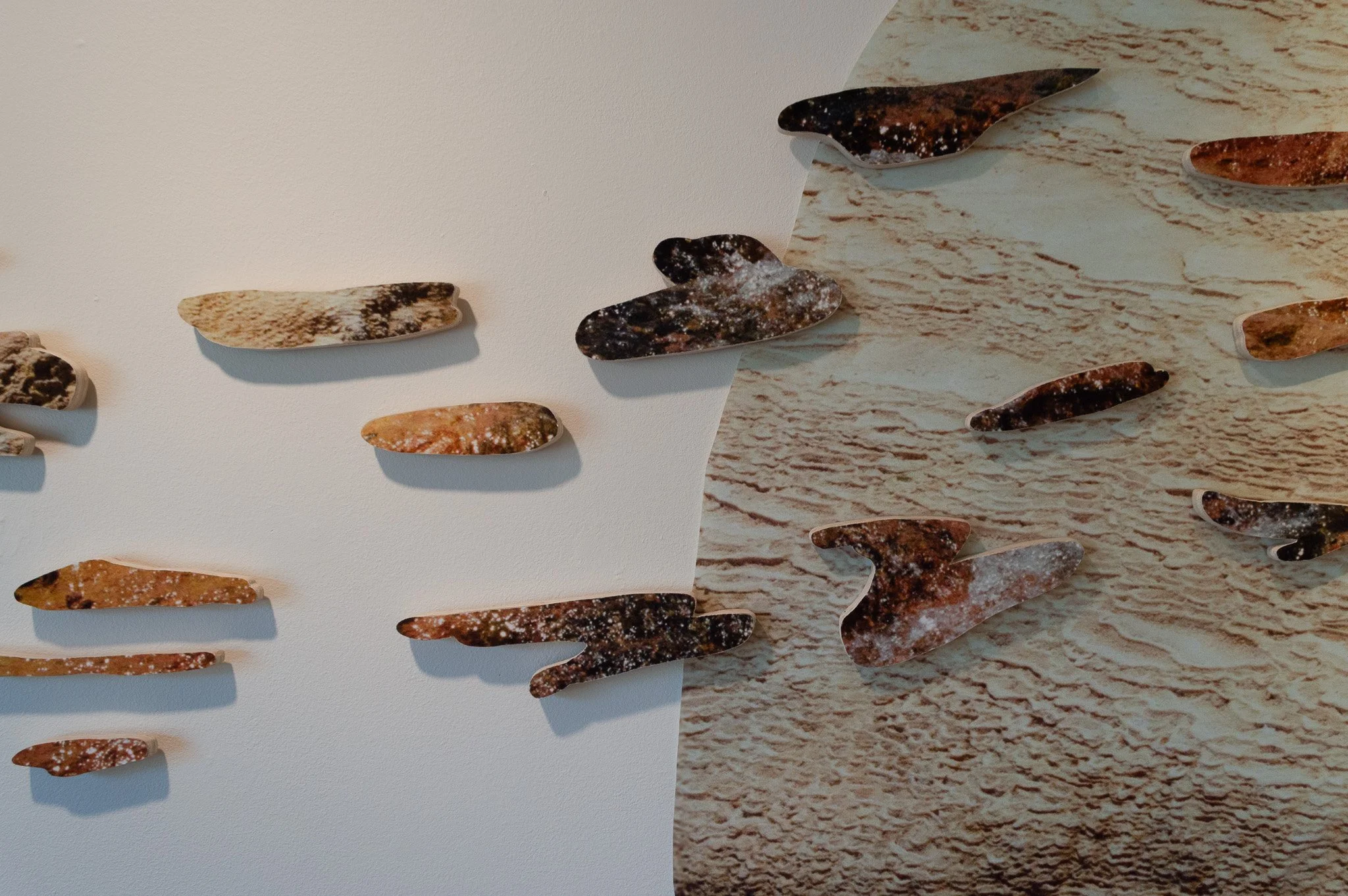
Detail of Geyser Tracing
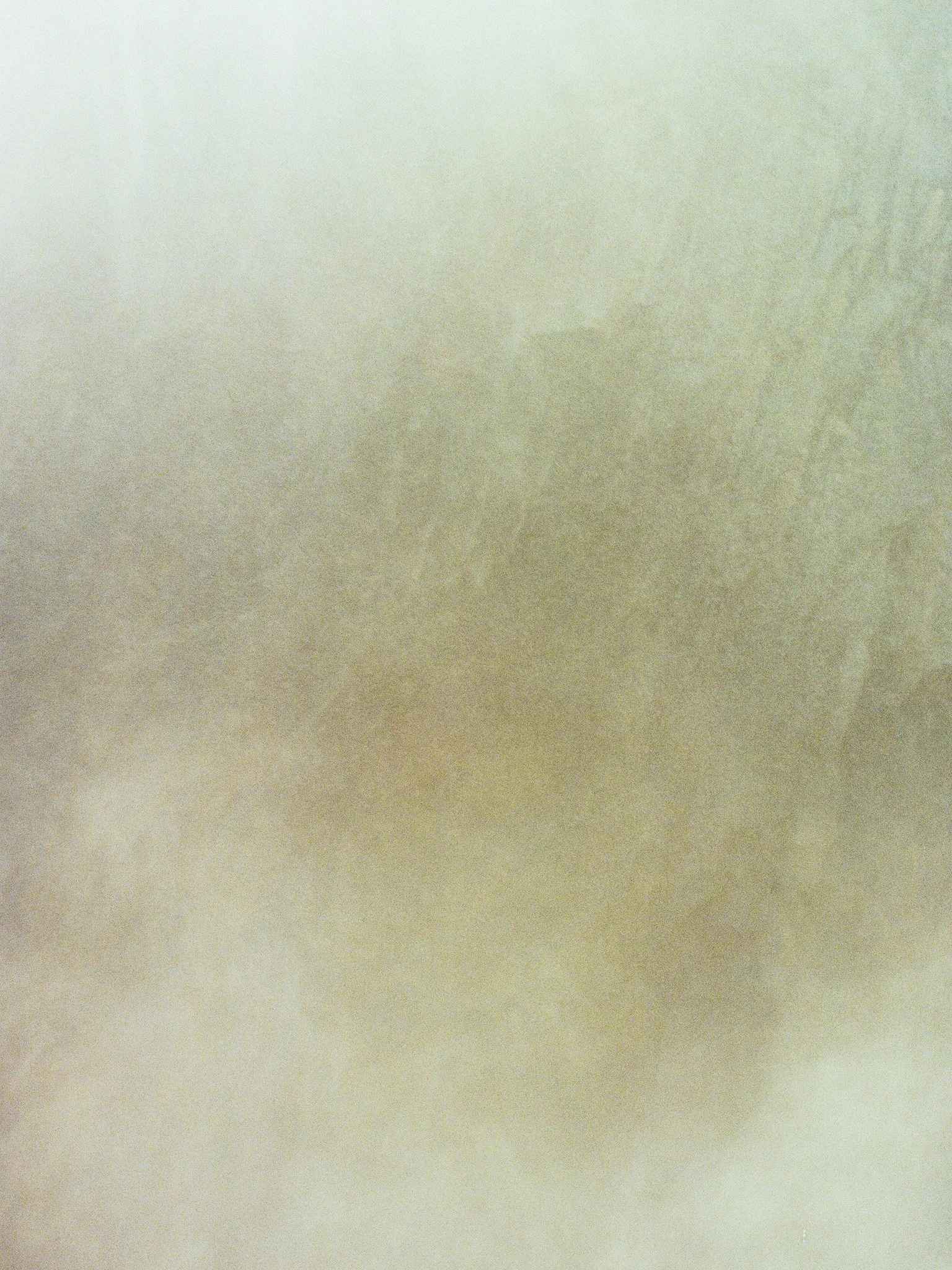
Mist portal, 2025.
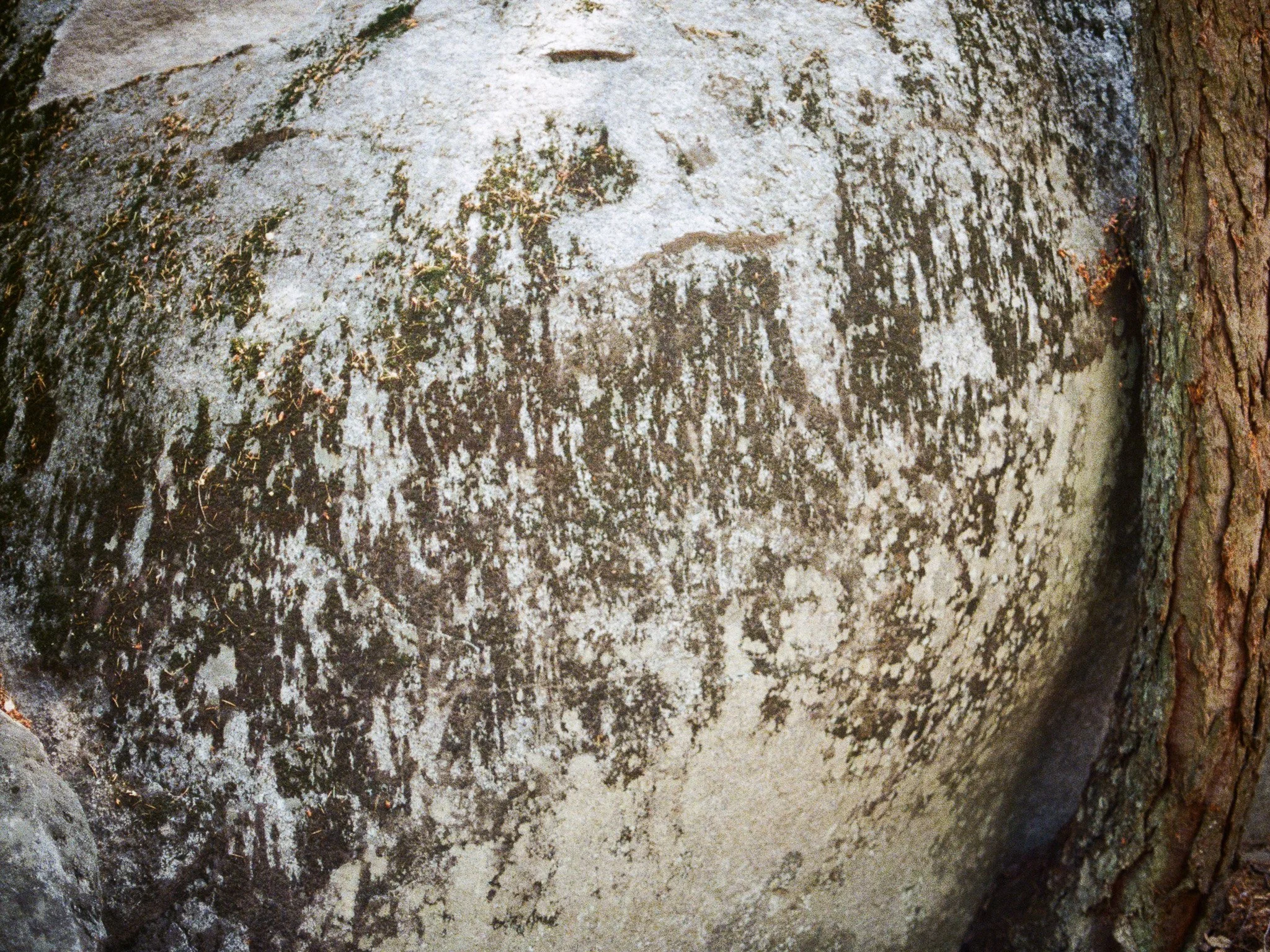
Stretch Marks, 2025.
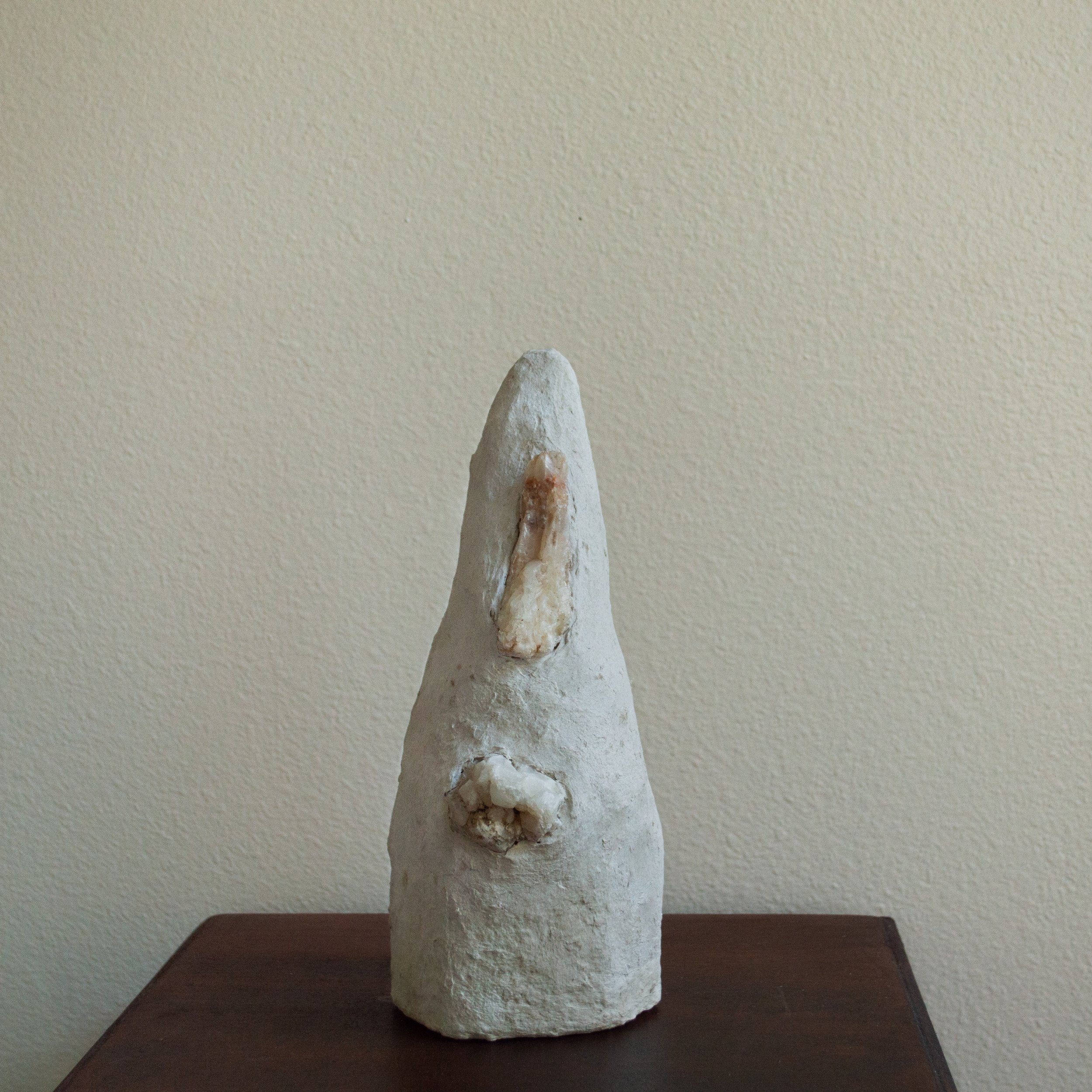
Crystal Tower, 2023. Paper pulp clay, found stones, 10”x4”diame ter.
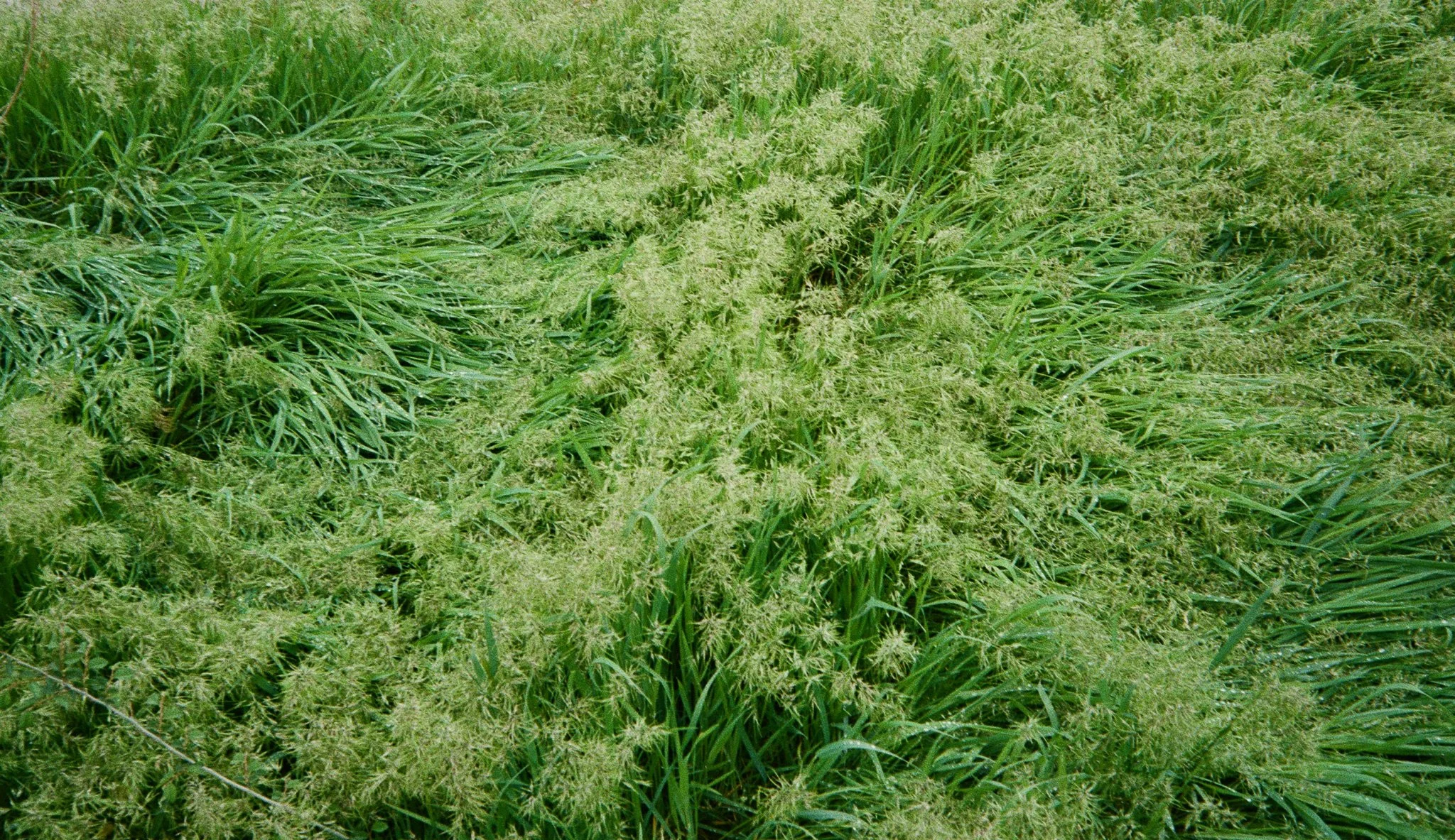
Grass message, 2024.
This body of work developed during a time in my life when I was deconstructing many of the beliefs I had held about life’s bigger questions. During that period, I found myself drawn more deeply toward uncertainty — toward accepting mystery rather than trying to resolve it — and toward the grounding presence of the Earth, which I have always felt connected to.
Around that time, I came across a passage from Pilgrim at Tinker Creek by Annie Dillard that stayed with me:
“Our life is a faint tracing on the surface of mystery, like the idle curved tunnels of leaf miners on the face of a leaf. We must somehow take a wider view, look at the whole landscape, really see it, and describe what's going on here.”
That idea of “tracing” became a guiding framework for this series.
My process is slow and meditative. All of the photographs were taken on walks or hikes, using 35mm film. Moving through the landscape is an essential part of the work. It requires me to slow down, to be fully present, and to stay in relationship with the places I move through.
As I move, I’m drawn to the marks left behind by time, weather, growth, and decay: layers of sediment in stone, lines carved by beetles into wood, evidence of forces that shape the world beyond our perception. These tracings are like records of something much larger than myself. They hold memory and suggest presence, but they never fully reveal it. They exist somewhere between mystery and knowing.
Photography is my way of attempting to listen and to really see. Alongside photographing, I physically collect fragments from the landscapes I work in — small details that catch my attention and feel charged in an unexplainable way. I think of these objects as physical punctum, borrowing Roland Barthes’ term for the detail that pierces the viewer beyond language. These collected materials are later incorporated into sculptural works, allowing the work to extend beyond the image plane and emphasize the materiality of the environments from which they come.
In a world saturated with digital images, I’ve become increasingly more interested in making physical objects. Expanding my photographic practice into sculpture is a way of resisting disembodied viewing and instead inviting a slower, more tactile form of attention.
I think of myself as the blind man feeling the elephant — gathering partial understandings, never seeing the whole. The photographs and sculptures become records of my attempts to connect with and understand the mysteries of existence. Through this work, I hope to invite viewers into a similar experience: one that encourages noticing, humility, and a recognition that we are not separate from the landscape, but shaped by the same slow and ancient cycles of life.